Clean Label and Healthy Eating
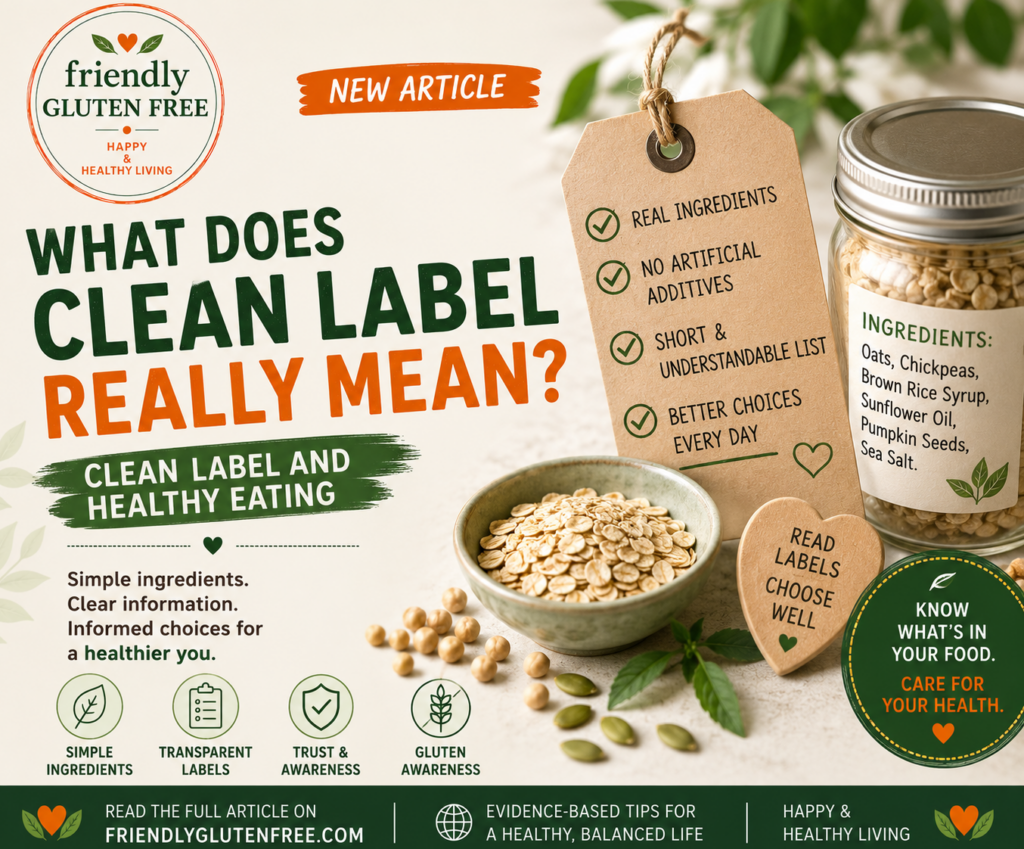
Clean label is a term we have been hearing more and more lately, and it has been one of the topics you, my readers, ask me about most often. Starting from your questions, I wanted to look at it together in this post.
What Is a Clean Label?
Clean label is an approach that aims for a product’s ingredient list to be short, understandable, and familiar. Under this approach, the number of ingredients is kept low, and artificial colorants, flavorings, and preservatives are either reduced as much as possible or removed altogether. Ingredient names are also kept simple, so consumers can easily understand what they are reading.
One important point needs to be made from the start: clean label is not a concept defined by regulatory authorities, nor does it appear explicitly in food legislation. In other words, it has no legal standing.
Why Does It Appear So Often?
Widely used in the food industry, this approach has also become a powerful marketing language for manufacturers. We frequently see it on packaging through phrases such as “natural,” “additive-free,” “simple ingredients,” and “few ingredients.”
Behind this lies a shift on the consumer side. People have come to understand the importance of healthy eating, want detailed information about the content of the products they consume, and are developing a culture of reading labels. As the need to trust the foods we eat every day has grown, so has the demand for transparency. Manufacturers’ interest in the clean label approach is a natural consequence of this demand.
The topic carries even greater importance for people who follow a gluten-free diet, those with food allergies or sensitivities, users of foods for special dietary purposes, and those who prefer additive-free, natural products. However, it is precisely for this group that some important details need attention.
Clean Label Does Not Mean Gluten-Free
The clean label approach does not give clear information about a product’s gluten content. A product bearing the statement “gluten-free” may be consistent with a transparent, clean label approach, but that statement alone does not provide assurance with respect to gluten. Statements such as “may contain traces due to cross-contamination” may be sufficient in terms of transparency, but they are not sufficient for someone who eats gluten-free.
If a product has been tested by accredited organizations, its gluten level has been proven to be within legal limits, and it carries a “gluten-free” logo, it can be considered safe for the consumer.
Natural Does Not Mean Allergen-Free
The situation is the same with food allergens. A natural product can also contain allergens; the words “natural” or “additive-free” do not mean that a product carries no allergens. Under the regulations, allergens must be highlighted in bold in the ingredient list. What matters most to you is that the presence of the relevant allergen is clearly stated on the label.
A clean label may indicate that the content is simple, but it does not show that no allergens are present. Because terms such as “mixture,” “natural flavor,” and “natural colorant” do not fully disclose the content, extra care is needed regarding allergens.
A similar situation applies to additives. The absence of additive codes on a label does not automatically mean that a product is additive-free and natural. What matters is that you check for yourself whether the ingredients are suitable for your health and your dietary plan.
In Summary
- Concepts such as “natural,” “minimally processed,” and “clean” vary from person to person and from manufacturer to manufacturer. There is as yet no legal status or regulation for these concepts.
- Products carrying a clean label may reflect a more transparent and trustworthy approach. However, this never means that a product is gluten-free or free of allergens.
- Clean label is an approach that stands out in marketing language, through which manufacturers try to earn consumer trust by being transparent.
- Consumers embrace the clean label approach and want to see it on more products. Ingredient information written in simple, understandable language stands out in terms of trust.
- As sensitivity to healthy eating, special dietary needs, and food allergens grows, the habit of reading labels is becoming increasingly widespread.