Celiac disease is a chronic, immune-mediated enteropathy triggered by gluten ingestion in genetically susceptible individuals. Mucosal damage in the small intestine, characterized by villous atrophy, can impair nutrient absorption. Consequently, certain vitamin deficiencies may be observed in individuals with celiac disease, particularly at diagnosis and before mucosal healing is complete.
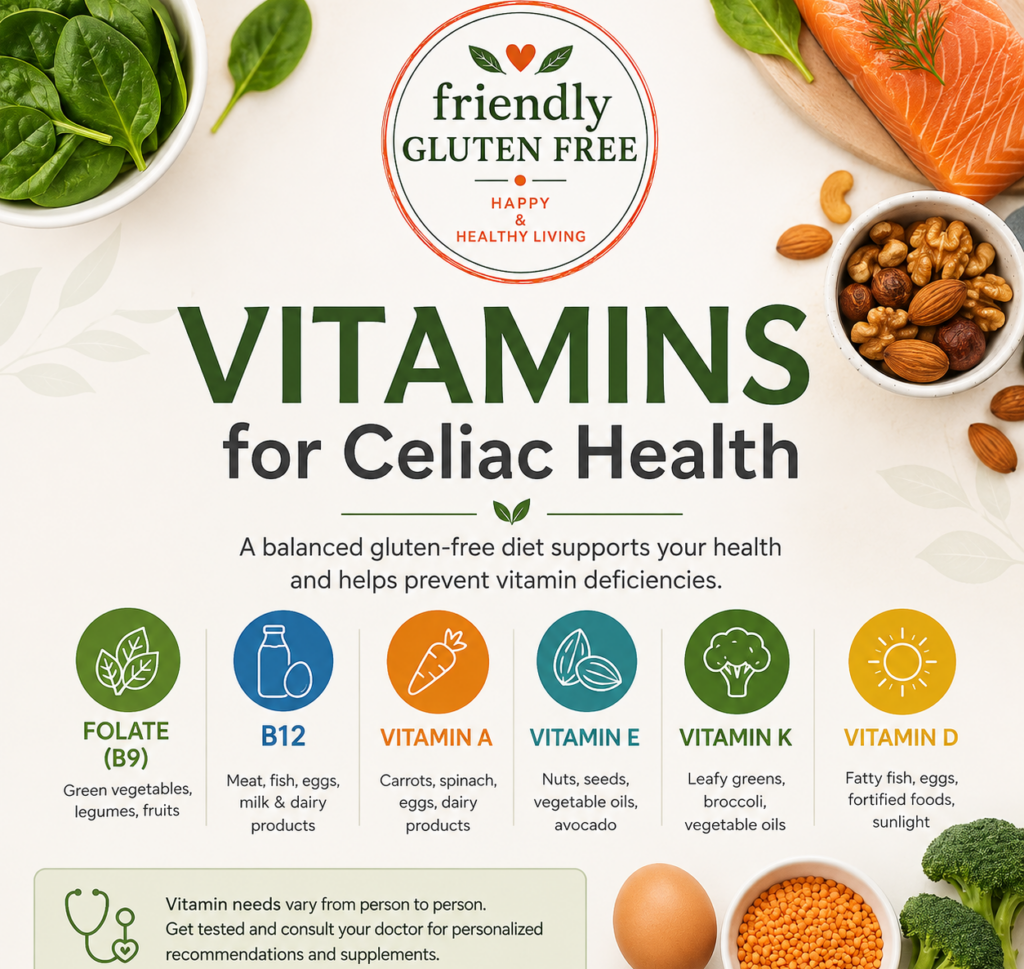
Folate (vitamin B9), vitamin B12, and the fat-soluble vitamins A, D, E, and K are of particular concern in this context. However, not every patient with celiac disease develops a deficiency. The risk depends on the severity of intestinal damage, dietary habits, and the nutritional adequacy of the gluten-free diet.
The vitamin and mineral status of patients with celiac disease should be evaluated by a physician on the basis of clinical findings and appropriate laboratory tests. If a deficiency is identified, dietary modification and, where necessary, supplementation may be planned accordingly.
This raises a practical question: which naturally gluten-free foods can supply these vitamins?
1. Folate (Vitamin B9)
Folate is a B-group vitamin essential for cell division, DNA synthesis, and erythropoiesis.
Naturally gluten-free sources of folate include:
Leafy green vegetables: spinach, arugula, watercress, lettuce, and purslane
Other vegetables: asparagus, broccoli, Brussels sprouts, and cauliflower
Legumes: lentils, chickpeas, and dried beans
Fruits: oranges and other citrus fruits, kiwi, and strawberries
Animal-derived sources: eggs
Including a variety of these foods in the daily diet supports adequate folate intake.
2. Vitamin B12
Vitamin B12 is required for normal nervous system function, DNA synthesis, and red blood cell formation. Deficiency may lead to anemia and neurological complications.
The main natural sources of vitamin B12 are:
Red meat and liver
Fish and seafood
Poultry
Eggs
Dairy products such as milk, yogurt, and cheese
Vitamin B12 occurs naturally almost exclusively in animal-derived foods. Plant foods are not considered reliable sources, although B12-fortified products may contribute to intake.
Adequate consumption of these foods supports B12 intake. However, when malabsorption related to celiac disease is present, dietary intake alone may not always be sufficient to achieve adequate B12 status. Blood levels should therefore be assessed when indicated, and the treatment plan should be determined by a physician.
3. Vitamin A
Vitamin A is a fat-soluble vitamin important for visual function, immune competence, cellular differentiation, and tissue integrity.
Dietary sources fall into two main groups:
Animal-derived sources: liver, egg yolk, milk and dairy products, and butter
Plant-derived sources: carrots, sweet potatoes, pumpkin, spinach, and red peppers
Animal foods contain preformed vitamin A (retinol), whereas plant foods contain carotenoids, which can be converted to vitamin A in the body.
Just as vitamin A deficiency can cause health problems, uncontrolled high-dose supplementation can be toxic. Supplementation should therefore be based on individual need and clinical assessment.
4. Vitamin E
Vitamin E is a fat-soluble antioxidant that helps protect cells from oxidative damage.
The main dietary sources include:
Sunflower seeds
Almonds and hazelnuts
Vegetable oils
Spinach
Avocado
Including these foods in a balanced diet supports vitamin E intake. As a fat-soluble vitamin, its absorption also depends on the presence of dietary fat.
5. Vitamin K
Vitamin K plays an essential role in normal blood coagulation and bone health.
The main dietary sources are:
Leafy green vegetables: spinach, kale, Swiss chard, and lettuce
Broccoli and Brussels sprouts
Parsley
Certain vegetable oils
Regular consumption of these foods contributes to vitamin K intake. However, when fat absorption is impaired, vitamin K absorption may also be reduced. Individuals taking anticoagulant medications (e.g., warfarin) should discuss any substantial changes in vitamin K intake with their physician.
6. Vitamin D
Vitamin D plays an important role in calcium and phosphorus metabolism, bone health, and muscle function. In celiac disease, impaired intestinal absorption may increase the risk of vitamin D deficiency.
Dietary sources of vitamin D include:
Fatty fish: salmon, sardines, mackerel, and anchovies
Egg yolk
Liver
Vitamin D-fortified milk and dairy products
Certain vitamin D-fortified plant-based beverages
The skin synthesizes vitamin D upon exposure to ultraviolet B (UVB) radiation. However, the amount produced depends on season, geographic latitude, skin pigmentation, and sun exposure habits. Relying on sunlight or diet alone may therefore not ensure adequate vitamin D status in every individual.
Vitamin D status should be assessed by blood testing when indicated, and the need for supplementation should be determined together with a healthcare professional.
Why Vitamin Support Matters in Celiac Disease
The prevention and treatment of vitamin deficiencies in celiac disease should not be reduced to the consumption of specific foods alone. The core approach consists of assessing vitamin and mineral status when medically indicated, maintaining strict lifelong adherence to a gluten-free diet, and ensuring dietary diversity.
A balanced gluten-free diet that includes vegetables, fruits, legumes, nuts, appropriate grains, and animal-derived foods as needed can support vitamin intake. In addition, reading product labels and preventing cross-contact are fundamental components of a gluten-free diet.
When adequate vitamin intake cannot be achieved through diet, or when laboratory tests confirm a deficiency, the type, dose, and duration of supplementation should be determined by a physician. Unnecessary or high-dose vitamin use may pose health risks, particularly for fat-soluble vitamins.
In conclusion: A gluten-free diet involves more than the elimination of gluten. Establishing a nutritionally adequate and balanced diet, undergoing appropriate monitoring, and adopting an approach tailored to individual needs all contribute to long-term health.
This article is intended for general informational purposes only and does not replace medical diagnosis, treatment, or individualized dietary advice. Please consult your physician regarding vitamin testing and supplement use.