Gluten-Free Nutrition, Celiac Disease, and Students
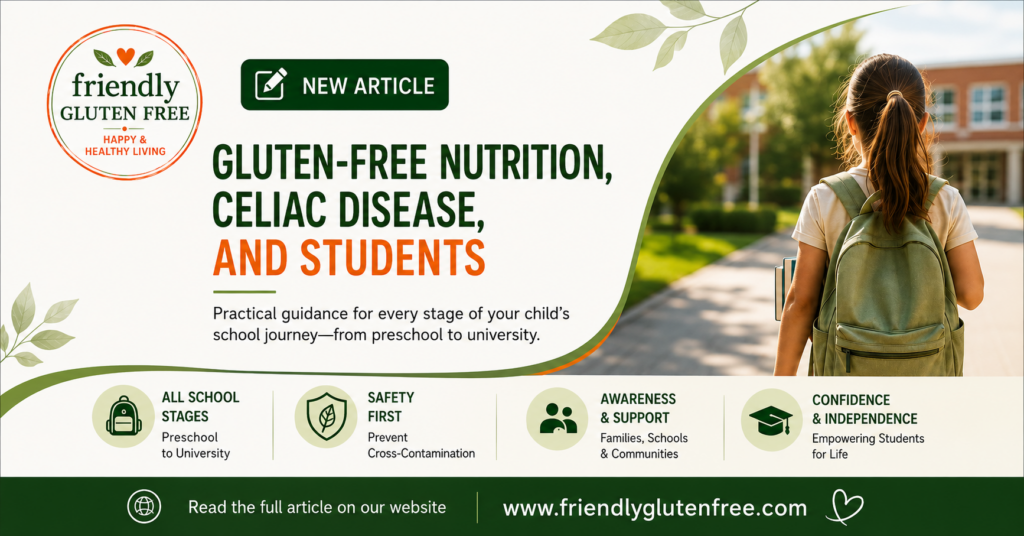
It is now widely accepted among scientists that, once celiac disease has been diagnosed, the only known treatment is a lifelong gluten-free diet. When it comes to how our children—our families’ most precious treasures—will manage this condition throughout their school years, parents first need to become well-informed themselves, and then pass that knowledge on to their children in the right way.
While what we can do at school changes depending on our children’s age, our real goal should be to raise them as inquisitive, resourceful, and confident communicators.
The Preschool Years
From the preschool years onward, it is essential to stay in contact with the school administration and with the families of classmates. We should inform them about celiac disease and openly explain why a gluten-free diet matters so much, as well as what cross-contamination risk actually means.
We should support—and take an active role in—efforts led by the school administration and the parent-teacher association, not only around celiac disease but around food allergens in general. During this period, we need to be prepared on many fronts, from play dough to snacks:
- We should explain the situation to teachers in detail and make them aware of our concerns about the ingredients used in play materials.
- On days when snacks are handed out to all the children, we should make sure gluten-free snacks are kept in a separate cabinet for children with celiac disease.
- So our child isn’t left out at birthday parties and similar events, the event should be announced in advance whenever possible, and other parents should be encouraged to bring gluten-free options such as cake or cupcakes.
- Even before children can read, we should teach them the logos and symbols that mean “gluten-free product.”
Elementary, Middle, and High School Years
As children grow older, they become more comfortable sharing their condition with friends and teachers. During this period, it becomes progressively easier for them to read food labels for gluten-free suitability on their own and to avoid environments where cross-contamination is a risk.
We need to teach children to be attentive—about everything from the spaces where they eat with friends to the menus offered—and to feel comfortable talking about their condition with the people around them, while understanding that a gluten-free diet is never a barrier to socializing.
The University Years
During the university years, most young people move away from their families to a different city, living in dormitories or on their own. For students with celiac disease living in dormitories, choosing an institution that is genuinely aware of the issue should be the top priority. If a dormitory lacks clear labeling or warnings about food allergens, this gap should be reported to management, with a request that proper precautions be put in place.
From restaurants and cafés on campus, we can reasonably ask for:
- Gluten-free menus to be prepared,
- Separate kitchen setups that prevent cross-contamination,
- And where that isn’t possible, at minimum a separate microwave—used only for heating gluten-free food—placed in a convenient spot in the dining hall.
Conclusion
Every child who has to eat gluten-free, regardless of age, both needs and has the right to spend time with friends, have fun, and receive an education. Asking authorities for gluten-free kitchens and meals is simply the most natural right a family can exercise.
When it comes to food allergens, the steps that families, schools, local governments, and the state take together—in genuine cooperation—will make children’s lives both easier and better.
You can visit our website for more of my writing on gluten-free living, celiac disease, and functional foods.
I wish you a healthy and happy life.
#GlutenFreeLiving #Celiac #HealthyEating #FunctionalFood #GlutenFree #friendlyglutenfree #SchoolLife #University #Education #Student