The hidden face of an undiagnosed condition
What Does the Iceberg Metaphor Mean?
Anyone who reads news, commentary, or research on celiac disease will quickly encounter the term “iceberg.” But what exactly does this metaphor describe?
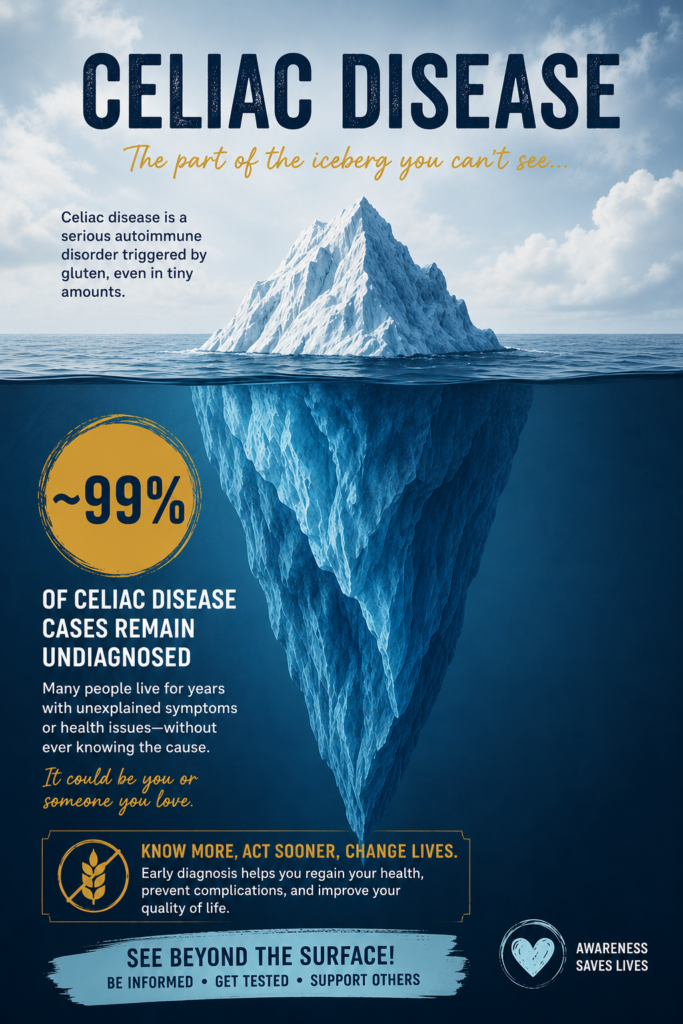
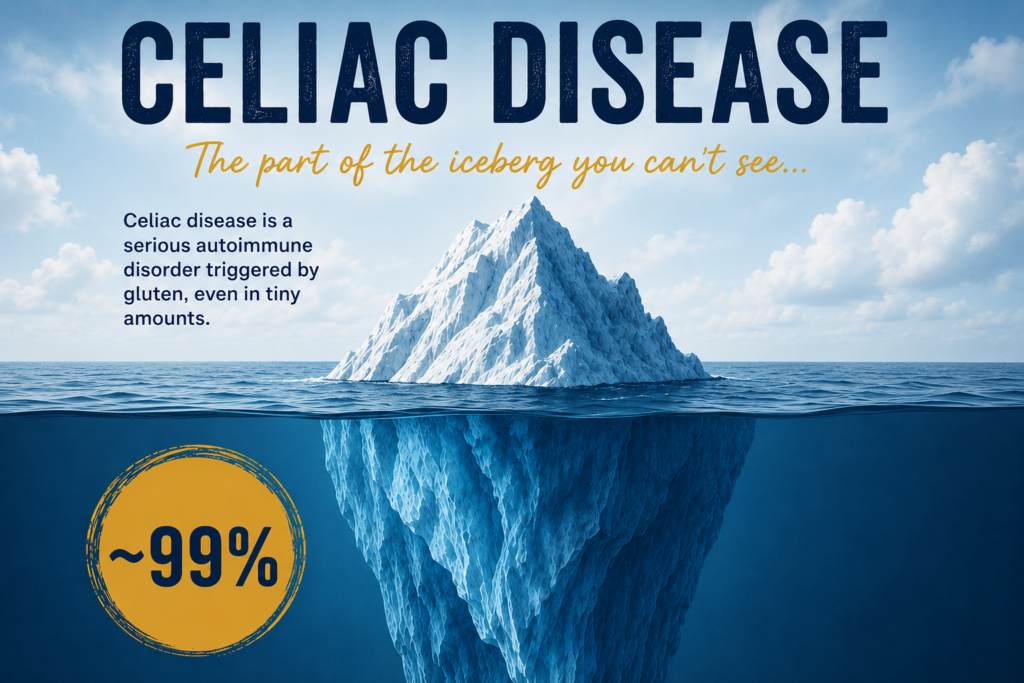
When an iceberg floats in the ocean, the visible portion above the waterline represents only a fraction of the total mass hidden beneath the surface. Celiac disease works in a strikingly similar way: the numbers we see in statistics reflect only those who have received a formal diagnosis. The far larger group — people who have never been tested or who remain undiagnosed — stays invisible beneath the surface.
How Common Is Celiac Disease?
Celiac disease is one of the most widespread food-allergen-related conditions in the world today. Prevalence varies by country, but global estimates consistently point to roughly 1% of the total population being affected.
That figure may sound modest, but when applied to billions of people, it reveals the true scale of the public health challenge we are facing.
Why Is Diagnosis So Difficult?
Celiac disease shares symptoms with many other conditions, and it can present subtly or only after years of exposure. These overlaps make rapid diagnosis the exception rather than the rule. Contributing factors include:
- Diagnostic testing involves multiple stages and requires specialist involvement.
- Access to testing is uneven — not all regions or healthcare systems can offer it reliably.
- Socioeconomic and educational barriers significantly limit large-scale screening programs.
- Some patients feel hesitant about the biopsy procedure and step back from the process.
- Symptoms that come and go can give a false sense of recovery, reducing the urgency to seek a diagnosis.
- The prospect of a strict, lifelong gluten-free diet can lead some individuals to resist or delay accepting a diagnosis.
All of these factors mean that diagnosed patients represent only a small fraction of all those living with the condition. This is precisely what the submerged part of the iceberg captures.
What Happens When Diagnosis Is Delayed?
When celiac disease goes unrecognized or untreated, the consequences extend well beyond the digestive system. Long-term risks include:
- Growth and developmental delays in children
- Delayed puberty and short stature
- Increased risk of small intestinal lymphoma
- Infertility and recurrent miscarriage, particularly in women
- Association with autoimmune conditions: Type 1 diabetes, Hashimoto’s thyroiditis, Sjögren’s syndrome
- Epilepsy and cerebral calcifications
Early diagnosis can prevent the majority of these complications. Starting a gluten-free diet promptly — especially in children — directly supports healthy growth and development.
Why Does Screening Matter?
Accelerating screening and diagnostic efforts for celiac disease carries profound importance at both the individual and societal level.
For individuals, early diagnosis directly improves quality of life. For communities, early treatment substantially reduces the burden of advanced complications and the healthcare costs they bring. This makes celiac screening not merely a clinical intervention, but an essential component of preventive public health.
Confronting the iceberg in its entirety — not just its visible tip — means giving more people access to the right diagnosis and, with it, the chance to live a healthier life.